India, US and UAE Hold Trilateral Meeting on Energy and Connectivity
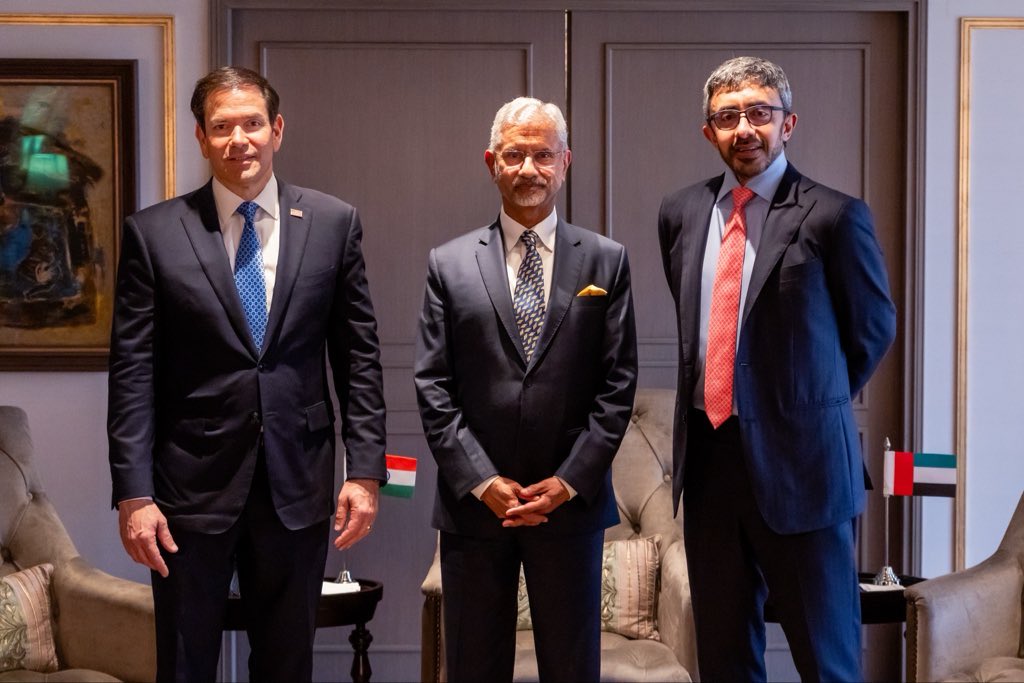
India, the United States and the United Arab Emirates held a trilateral meeting involving their senior diplomatic representatives to discuss energy, connectivity and contemporary international developments. India's External Affairs Minister S. Jaishankar met UAE Deputy Prime Minister and Foreign Minister Sheikh Abdullah bin Zayed Al Nahyan and US Secretary of State Marco Rubio for an exchange of views on areas of shared interest. The meeting highlighted the three countries' continued engagement on regional and global issues.
Following the meeting, Jaishankar described the discussions as a useful exchange of perspectives on energy, connectivity and current developments. The talks provided an opportunity for the three sides to assess common priorities and explore ways to strengthen cooperation. However, the public statement did not specify a detailed list of decisions or announce a new agreement resulting from the meeting.
Energy cooperation was one of the key subjects discussed. India depends significantly on international energy supplies to meet domestic demand, while the UAE is an important energy producer and a major economic partner. The United States also plays a significant role in global energy markets. Continued dialogue among the three countries could help address shared concerns about energy security, supply chains and developments affecting international markets.
Connectivity was another important area of discussion. Stronger regional and international connections can support trade, investment and the movement of goods between markets. India, the UAE and the United States have economic interests that extend across several regions, making transport networks, logistics and commercial links relevant to their broader cooperation. The meeting provided a diplomatic platform to exchange views on these priorities.
The discussions also covered contemporary international developments, reflecting the three countries' interest in understanding changing regional and global conditions. Diplomatic consultations of this kind allow governments to communicate their positions, identify common concerns and consider areas where their interests overlap. The official statement, however, did not provide enough detail to attribute specific positions on individual conflicts or geopolitical disputes to the participants.
India and the UAE maintain extensive economic ties, including cooperation in trade, investment, energy and infrastructure. The United States is also a significant partner for India in technology, defence, trade and strategic affairs. Bringing representatives from all three countries together creates an opportunity to discuss issues that affect their respective economic and diplomatic interests.
The trilateral format also reflects a broader effort to maintain dialogue among countries that share several strategic and economic priorities. Such meetings can help build diplomatic understanding and identify opportunities for future cooperation. Nevertheless, discussions alone do not necessarily indicate that a new policy, investment commitment or formal agreement has been finalised.
The meeting concluded with an exchange of perspectives on energy, connectivity and international developments. While the discussions underscored the importance of continued engagement between India, the United States and the UAE, any specific new initiatives or agreements should be reported only when confirmed by official statements. The outcome represents another step in ongoing diplomatic consultations among the three countries.